



QLD Silica Rules: What Builders and PCBUs Must Do
On this page
- From 1 September 2024, stronger national rules on processing crystalline silica substances took effect, directly affecting Queensland builders, stonemasons and concreters.
- A crystalline silica substance is broadly material containing at least 1% crystalline silica: concrete, bricks, pavers, tiles, and engineered and natural stone.
- The workplace exposure standard for respirable crystalline silica is 0.05 mg/m³ averaged over an eight-hour day. Where you cannot be certain workers stay below it, air monitoring is required.
- Monitoring should be carried out by a competent person to AS 2985, with samples analysed by an independent NATA-accredited laboratory. Exceedances must be reported to WorkSafe Queensland and controls reviewed.
- PCBU duties: identify high-risk processing, apply controls so far as reasonably practicable, use monitoring data to check they work, train at-risk workers and keep records, and provide health monitoring.
From 1 September 2024, stronger national rules on processing crystalline silica substances took effect, and they directly affect Queensland builders, stonemasons, concreters and other trades. Here's a plain-English summary of what changed and what you need to do.
What changed in 2024
The model work health and safety laws were amended to tighten controls on processing any crystalline silica substance (CSS) — broadly, material containing at least 1% crystalline silica, such as concrete, bricks, pavers, tiles and engineered and natural stone. Cutting, grinding, drilling or demolishing these materials can release respirable crystalline silica (RCS), a known cause of silicosis.
The workplace exposure standard
The workplace exposure standard for RCS is 0.05 mg/m³ averaged over an 8-hour day. Where you can't be certain workers stay below this level, air monitoring is required to check.
When is air monitoring required?
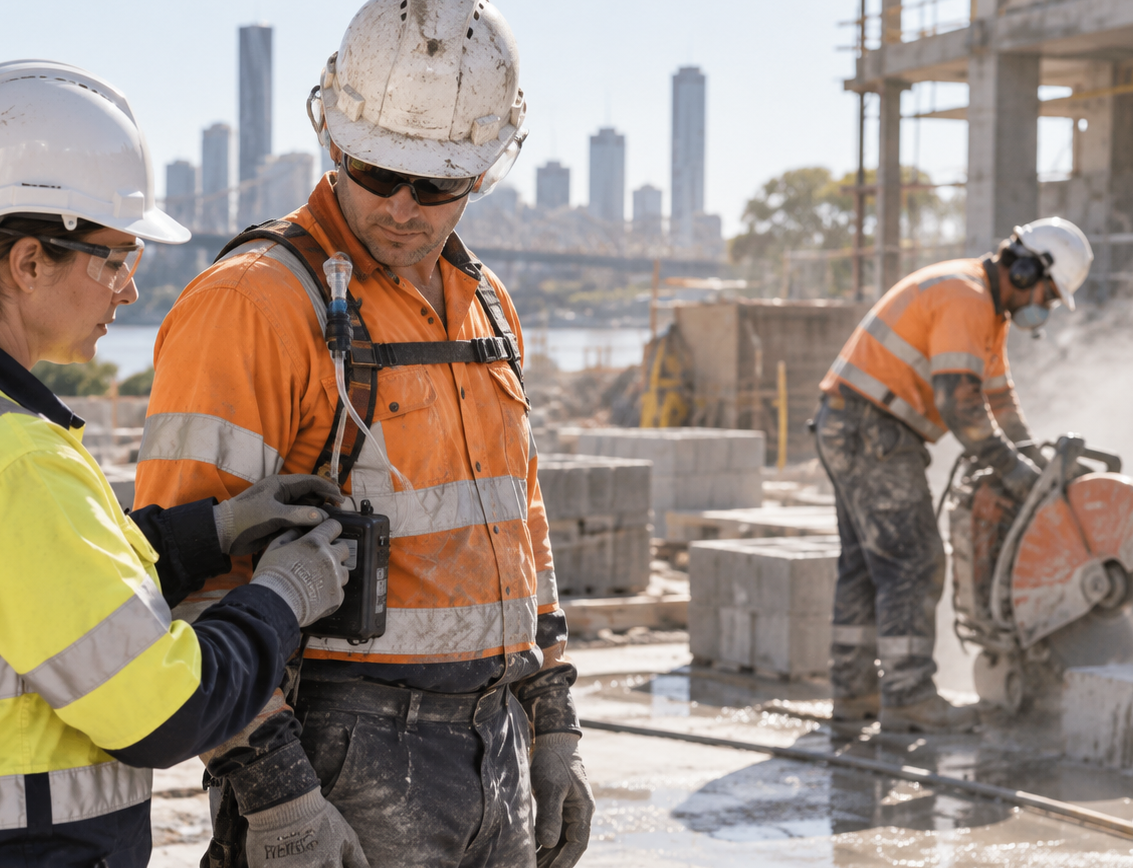
Air monitoring should be carried out by a competent person — in practice, a qualified occupational hygienist — using equipment to Australian Standard AS 2985, with samples analysed by an independent NATA-accredited laboratory. If results exceed the standard, they must be reported to WorkSafe Queensland and controls reviewed.
What builders and PCBUs must do
- Identify high-risk processing of crystalline silica on your sites.
- Apply control measures so far as reasonably practicable (water suppression, on-tool extraction, RPE).
- Use air monitoring data to check those controls are working.
- Provide crystalline silica training to at-risk workers and keep training records.
- Provide health monitoring to at-risk workers.
Note: regulatory detail changes — confirm your specific duties with WorkSafe Queensland.
How BBN helps
Our occupational hygienists provide respirable crystalline silica monitoring and workplace exposure monitoring to AS 2985, with accredited laboratory analysis and clear reporting. Get in touch or call 0410 170 853.
Frequently asked questions
What is the silica exposure limit in Australia?
0.05 mg/m³ of respirable crystalline silica averaged over an eight-hour working day. Where you cannot be certain workers stay below this level, air monitoring is required to check.
Who can do silica air monitoring?
A competent person, typically a qualified occupational hygienist, using AS 2985 methods with samples analysed by an independent NATA-accredited laboratory.
What changed in the 2024 crystalline silica rules?
From 1 September 2024, the model work health and safety laws were amended to tighten controls on processing any crystalline silica substance, broadly material containing at least 1% crystalline silica such as concrete, bricks, pavers, tiles and engineered and natural stone.
What do builders and PCBUs have to do?
Identify high-risk processing of crystalline silica on site, apply control measures so far as reasonably practicable such as water suppression, on-tool extraction and respiratory protection, use air monitoring data to check those controls are working, provide crystalline silica training to at-risk workers and keep training records, and provide health monitoring to at-risk workers.
.jpg)